-
A-A+
- Persoane cu deficiențe de vedere
- Українською
- Українською
Română
Română
Key Results of the President’s Foreign Policy Work in September
02 octombrie 2026 15:23
In September, the foreign policy work of President of Ukraine Volodymyr Zelenskyy focused primarily on strengthening Ukraine’s air defense, expanding defense cooperation with partners, supporting Ukraine’s energy sector and resilience ahead of the winter period.
Last month, the Head of State held 30 international meetings.
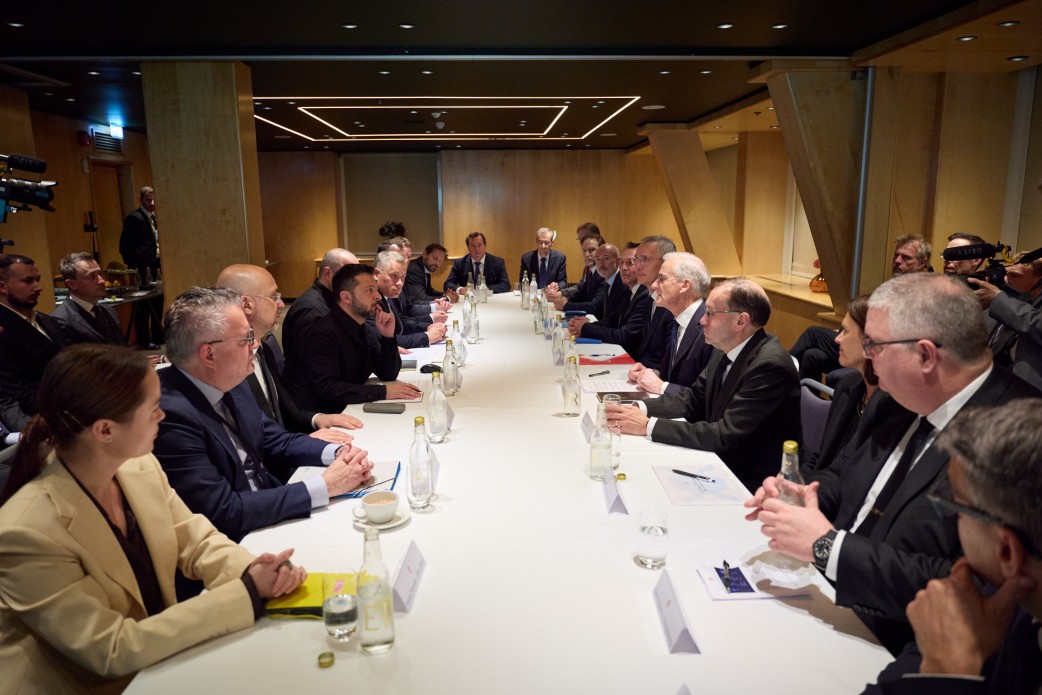
During his trips abroad, the President of Ukraine met with U.S. President Donald Trump, President of Türkiye Recep Tayyip Erdoğan, President of France Emmanuel Macron, and President of Chile José Antonio Kast; held a trilateral meeting with President of Finland Alexander Stubb and Prime Minister of Norway Jonas Gahr Støre; and met with Australian Prime Minister Anthony Albanese, UK Prime Minister Andy Burnham, Danish Prime Minister Mette Frederiksen, Canadian Prime Minister Mark Carney, Dutch Prime Minister Rob Jetten, Norwegian Prime Minister Jonas Gahr Støre, Japanese Prime Minister Sanae Takaichi, President of the European Commission Ursula von der Leyen, NATO Secretary General Mark Rutte, International Monetary Fund Managing Director Kristalina Georgieva, Icelandic Minister for Foreign Affairs Þorgerður Katrín Gunnarsdóttir, a bipartisan delegation of U.S. senators and members of the House of Representatives, the leadership of defense companies from partner countries, the executives of more than 30 leading U.S. companies, members of the Economic Advisory Group, and U.S. Deputy Under Secretary of the Treasury Jonathan Greenstein.
In Ukraine, Volodymyr Zelenskyy met with President of Romania Nicușor Dan, President of Serbia Aleksandar Vučić, Polish Prime Minister Donald Tusk, Speaker of the Folketing of Denmark Søren Gade, Speaker of the House of Representatives of Japan Eisuke Mori, Indian Minister of External Affairs Subrahmanyam Jaishankar, Slovenian Minister of Foreign and European Affairs Tone Kajzer, Slovenian Minister of Defense Valentin Hajdinjak, U.S. President’s Special Envoys Steve Witkoff and Jared Kushner, President of the European Bank for Reconstruction and Development Odile Renaud-Basso, President of the Generalitat of Catalonia Salvador Illa, and Mayor of Barcelona Jaume Collboni.
In September, the President visited Norway, Canada, and the United States.
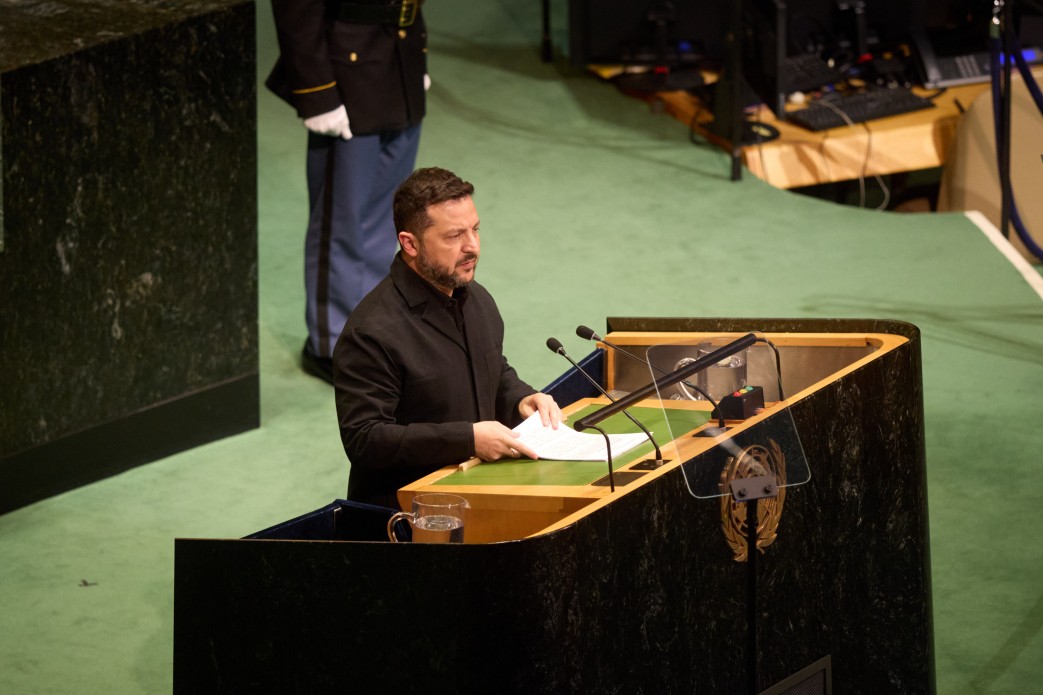
In Oslo, Volodymyr Zelenskyy attended the farewell ceremony for King Harald V of Norway, discussed strengthening Ukraine’s air defense and preparations for winter with Norwegian Prime Minister Jonas Gahr Støre, and held a meeting with the executives of defense companies from partner countries focused on implementing the FREYJA anti-ballistic program.
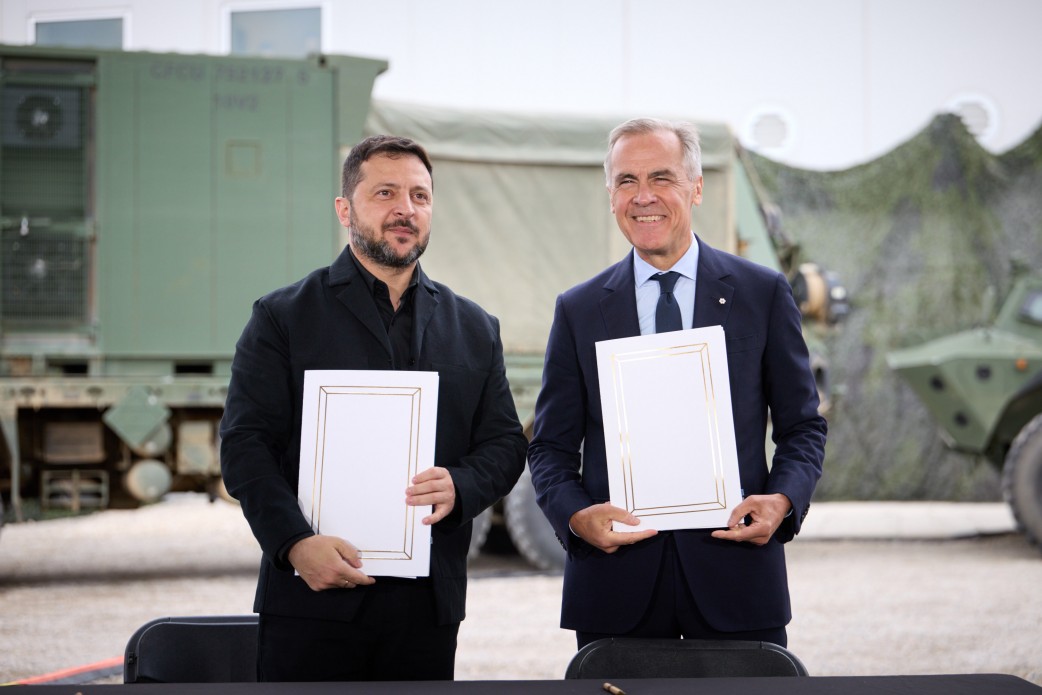
In Calgary, following Volodymyr Zelenskyy’s meeting with Mark Carney, Canada announced $2 billion in support for Ukraine for Patriot missiles, F-16 ammunition, the co-production of drones, and energy.
The President of Ukraine and the Prime Minister of Canada signed a Declaration for a 100 Year Partnership and a Joint Declaration on Enhancement of the Defense and Security Cooperation. In the presence of the leaders, a Joint Statement on Energy Cooperation was also signed.
The Declaration for a 100 Year Partnership is based on innovation and defense partnership, economic growth, and reconstruction. The Joint Declaration paves the way for the Drone Deal, which will be the first agreement of its kind with a country in the Americas. It deepens cooperation in the defense sector, with a focus on security cooperation in unmanned systems, the defense industry, cybersecurity, and technological development. It also provides for joint projects and the localization of defense production in Ukraine and Canada.
During the UN General Assembly in New York, the President of Ukraine and the President of the United States discussed steps that could open the way to diplomacy, support for Ukraine ahead of winter, and the implementation of the agreement to localize production of Patriot interceptor missiles in Ukraine.
In New York, the Head of State signed:
An Agreement on Long-Term Support and Cooperation between Ukraine and Australia. Australia will continue training Ukrainian warriors and participate in the NSATU and PURL programs and the Drone Coalition. The agreement also covers cooperation in the defense industry, energy support, assistance with economic recovery and reconstruction, the rehabilitation and reintegration of veterans, and other areas.
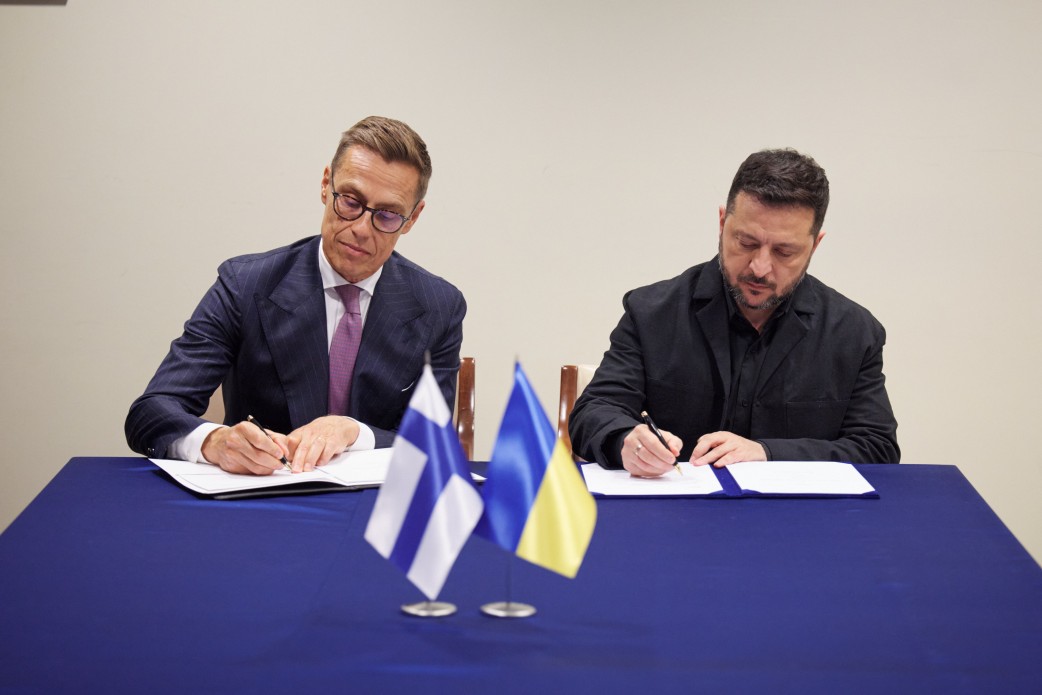
A Drone Deal with Finland. This is the 11th agreement in this special format that Ukraine has concluded with its partners.
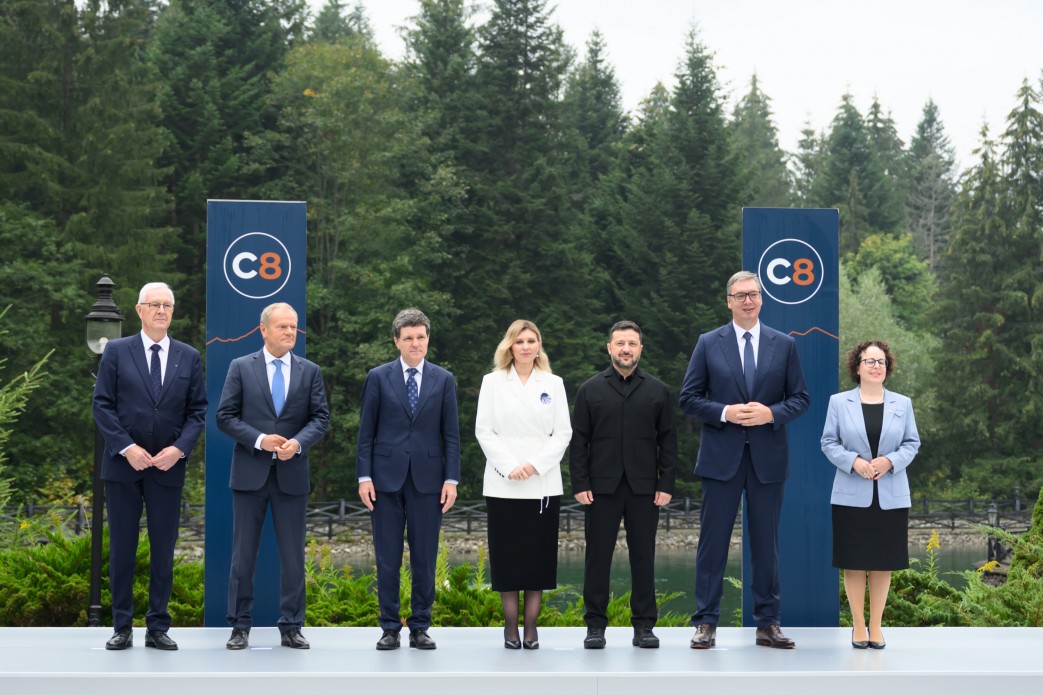
On September 18, the first summit of the Carpathian Integration Initiative took place in Huta, Ivano-Frankivsk region. The initiative was launched by Ukraine to deepen cooperation among countries in the region. It is a platform for attracting European investment to develop cross-border logistics and ensure humanitarian and energy security. A new format, the Carpathian Eight, was established, bringing together Ukraine, Austria, Poland, Romania, Serbia, Slovakia, Hungary, and Czechia.
In September, Volodymyr Zelenskyy held 11 phone calls: with U.S. President Donald Trump; President of Finland Alexander Stubb (three conversations); President of France Emmanuel Macron; President of Peru Keiko Fujimori; Federal Chancellor of Germany Friedrich Merz; Prime Minister of Norway Jonas Gahr Støre; President of the European Commission Ursula von der Leyen; NATO Secretary General Mark Rutte; and U.S. President’s Special Envoys Steve Witkoff and Jared Kushner.
The Head of State took part in the following international events and meetings: the 81st session of the UN General Assembly in New York; the sixth summit of the International Crimea Platform, which was held at the UN General Assembly venue for the second consecutive year; the first summit of the Carpathian Integration Initiative in Huta, Ivano-Frankivsk region; and the Yalta European Strategy 2026, where he addressed the participants online.
Defense packages and other assistance:
The United States, France, and Germany: missiles for air defense systems.
Australia: a support package worth AUD 60 million, including 45 million for military equipment, 10 million to support Ukraine’s energy sector, and 5 million in humanitarian assistance. Australia also joined the Maritime Capability Coalition, led by the United Kingdom and Norway.
Belgium: ammunition for F-16s and the delivery of three F-16 fighter jets by the end of 2026.
The United Kingdom: a £100 million contribution to PURL to strengthen Ukraine’s air defense, including with Patriot missiles. The contribution will also provide an additional 95,000 drones by the end of the year, as well as tens of thousands of extended-range artillery shells funded by other countries.
Denmark: its 31st defense assistance package, worth approximately $275 million. The funds will be used to strengthen air defense capabilities.
Spain: deliveries of air defense missiles and artillery ammunition, as well as ammunition for F-16s; it will also allocate €2 million for fuel through the NATO Support and Procurement Agency.
Canada: will allocate CAD 350 million ($253 million) to purchase air defense interceptor missiles for Ukraine, as well as an additional 23 million to strengthen Ukraine’s security capabilities. Canada and Ukraine will also establish a mechanism for supplying drones under the Defence Drone Initiative Marketplace (DDIM), modeled on Ukraine’s Brave1 platform.
Lithuania: $10 million for PURL.
The Netherlands: $300 million for the Drone Line project and the delivery of 300 anti-drone missiles.
Germany: announced new deliveries of interceptor missiles for Patriot systems and ammunition for F-16 aircraft.
Poland: preparation of a new assistance package and joining the Anti-Ballistic Missile Coalition.
The United States: the State Department approved a possible sale to Ukraine of air defense system modernization equipment, along with related equipment and services, worth approximately $2.68 billion.
Finland: allocation of its 34th military assistance package to Ukraine, worth €290 million.
Sweden: announced a $28 million support package for Ukraine, half of which will go to PURL.
The European Union: transferred €3.3 billion to Ukraine under the Ukraine Support Loan, to be used for critical defense needs, including for the purchase of missiles and drones. EU member states agreed to unblock €6.6 billion under the European Peace Facility to support Ukraine.
In Brussels, the EU-Ukraine Drone Alliance began its work, bringing together nine Ukrainian and nine European companies. Its goal is to jointly develop European capabilities in drones and counter-drone systems and make use of the experience Ukraine has gained during the war.
Sanctions measures:
The President signed decrees enacting decisions by the National Security and Defense Council of Ukraine to impose sanctions on vessels of Russia’s shadow fleet; companies and individuals linked to the Russian state-owned corporation Rostec; propagandists who justify Russia’s aggression; and individuals involved in holding illegal “elections” to the Russian State Duma in the temporarily occupied territory of our country.
Steps taken by partner countries:
The United States: U.S. President Donald Trump signed the Lindsey Graham Act, expanding sanctions authorities against the Russian Federation and providing for sanctions on designated Russian entities and countries that purchase Russian energy or facilitate sanctions evasion. The United States also added Russia’s VTB Bank to its anti-Iran sanctions list. It is one of Russia’s systemically important banks, which is significantly involved in schemes supporting Russia’s war and in Russia’s relations, including with the Iranian regime,
The European Union: extended personal sanctions against more than 3,000 individuals and entities until September 22, 2029; imposed sanctions on 10 individuals and 17 entities for their involvement in the illegal deportation, forced transfer, and re-education of Ukrainian children; imposed sanctions on 10 individuals for repression of the democratic opposition and undermining democracy and the rule of law in the Russian Federation, and added Xenia Fedorova, the former head of the French division of RT, to its sanctions lists.
Australia: imposed sanctions on 33 individuals and 35 entities, as well as 38 shadow-fleet vessels. The sanctioned entities include companies in Russia’s financial sector and defense industry.
Canada: imposed sanctions on eight individuals involved in the illegal deportation and forced transfer of Ukrainian children, as well as their indoctrination and militarization.
